Telemetry reveals full Ferrari impact of Hamilton, Leclerc clash in Las Vegas
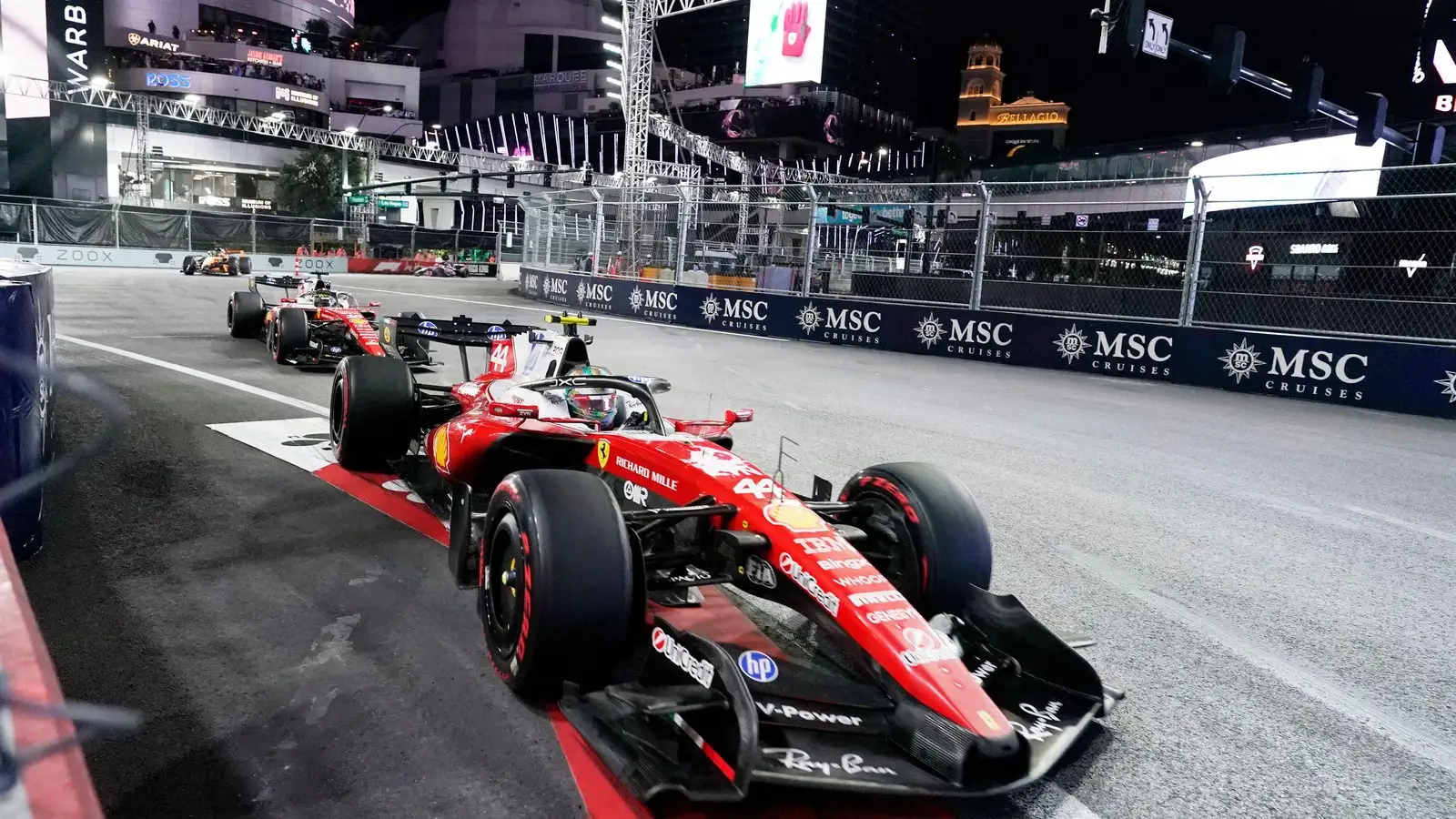
Just a few laps before their collision in Las Vegas, Lewis Hamilton was 2.5 seconds behind the race leader and Charles Leclerc 2.9 seconds adrift, with Ferrari the fastest car on track.
Telemetry data reveals how much pace the team had in hand, and how a Lap 38 clash left them with just seven points from a race they could have turned into a double podium – and possibly more.
How Far Could Ferrari Have Gone in Las Vegas?
As discussed after qualifying, Las Vegas combines the worst possible circuit characteristics for the SF-26.
The cold track surface amplifies tyre warm-up struggles, preventing Ferrari from matching its usual cornering competitiveness, while the long straights ruthlessly expose its power unit deficit and lower ERS efficiency.
During qualifying, that lack of straight-line speed along the Strip wasn’t an issue, as Ferrari adjusted its deployment strategy to remain competitive there and avoid becoming sitting ducks in the race.
However, it paid a heavy price for that compromise in the middle sector. Long runs in FP3 revealed that, while Ferrari trailed the leaders on race pace, roughly 70 percent of that deficit originated specifically in Sector 2.
Going into Sunday with low expectations, the race nonetheless unfolded very differently.
The Grand Prix was both unusual and thrilling to watch: after 10 laps, the top 10 runners sat within five seconds of the race leader—a rare sight in modern Formula 1.
Ferrari remained firmly in that lead pack, with both drivers showing solid pace during the opening stint.
Starting from P11, one spot behind Leclerc, Hamilton overtook his teammate on the opening lap and climbed as high as P6 at one stage, before settling into P7 and P8 around Lap 15 to battle Norris and Piastri for position.
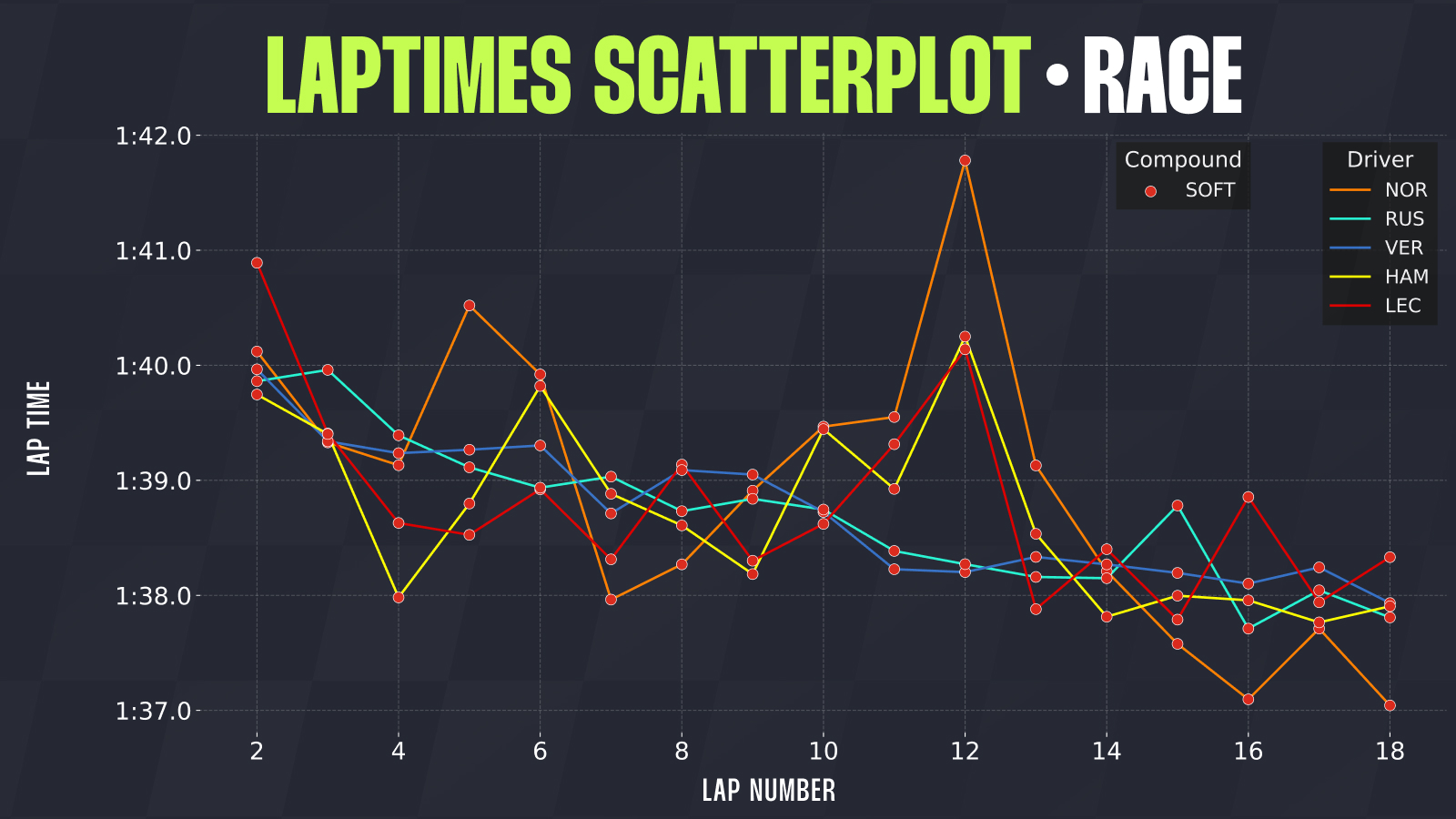
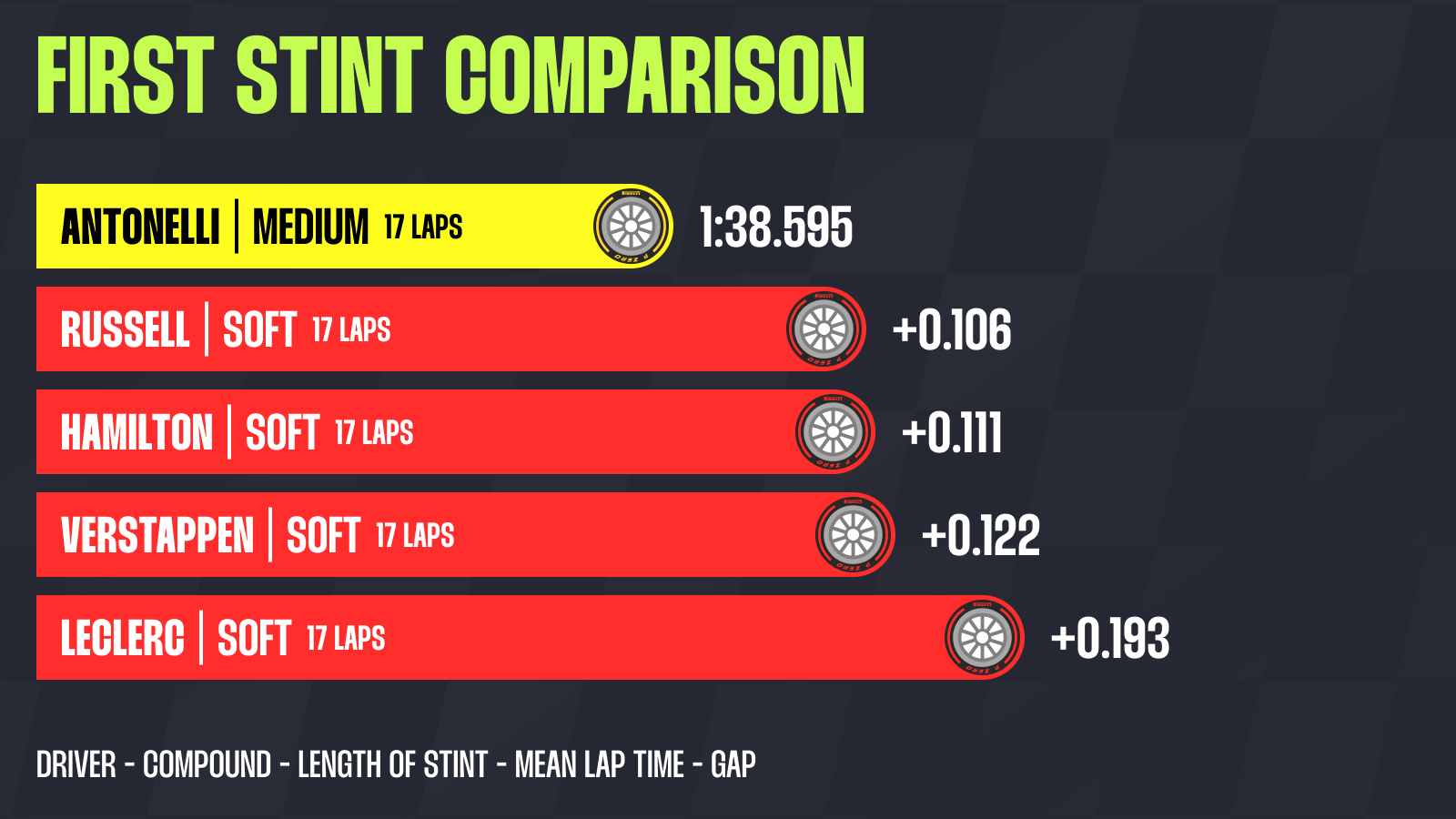
The graph below illustrates average lap times across the opening stint: Antonelli and Piastri set the pace on track, yet everyone else—aside from Norris, who dropped several places—remained closely matched.
George Russell, Hamilton and Max Verstappen were on nearly the same race pace for the first 17 laps of the race.
Laptimes scatterplot – Race
First stint comparison
A Lap 19 Safety Car effectively ended any strategic variation: everyone switched from softs to mediums or vice versa, locking in their compounds to the chequered flag.
At the Lap 26 restart, Leclerc held seventh, while Hamilton dropped back to P13 after serving a 10-second time penalty and pitting a lap later than the bulk of the field.
On the medium compound, however, Ferrari’s pace looked even stronger than in the first stint.
Hamilton drove brilliantly, climbing from P13 to P8 in just six laps, while Leclerc gained a spot to sit in P6, with Piastri sandwiched between the two scarlet machines.
That triggered the intra-team fight that ultimately ended in contact between Hamilton and Leclerc.
Piastri moved ahead of both red cars, while Hamilton pulled off a crisp move around the outside of Turn 3 to repass his teammate.
Crucially, a few laps before the collision, Hamilton trailed race leader Verstappen by only 2.5 seconds, with Leclerc just 2.9 seconds adrift; both drivers remained firmly in the fight and, with overtaking happening throughout the field, anything was possible.
Then came Lap 38: Hamilton attempted a pass down the inside of Piastri on entry to Turn 5 but failed to complete it, slightly compromising his corner exit—an opening Leclerc immediately tried to exploit.
On entry to Turn 7, Charles dived up the inside, resulting in contact that left Hamilton spun around facing the wrong way.
Hamilton was ahead at the apex and owned the corner, a verdict confirmed by the stewards, who handed the Monegasque driver a 10-second penalty as his teammate plummeted down the order.
Data underscores just how rapid Hamilton was during those opening laps of the second stint: he averaged the fastest pace of any front-running driver, as shown in the graph below – more than four tenths of a second per lap faster than Verstappen on average.
Naturally, that delta would have narrowed by the finish, but the takeaway is clear: Ferrari possessed the raw pace to take the fight to McLaren, and possibly Verstappen.
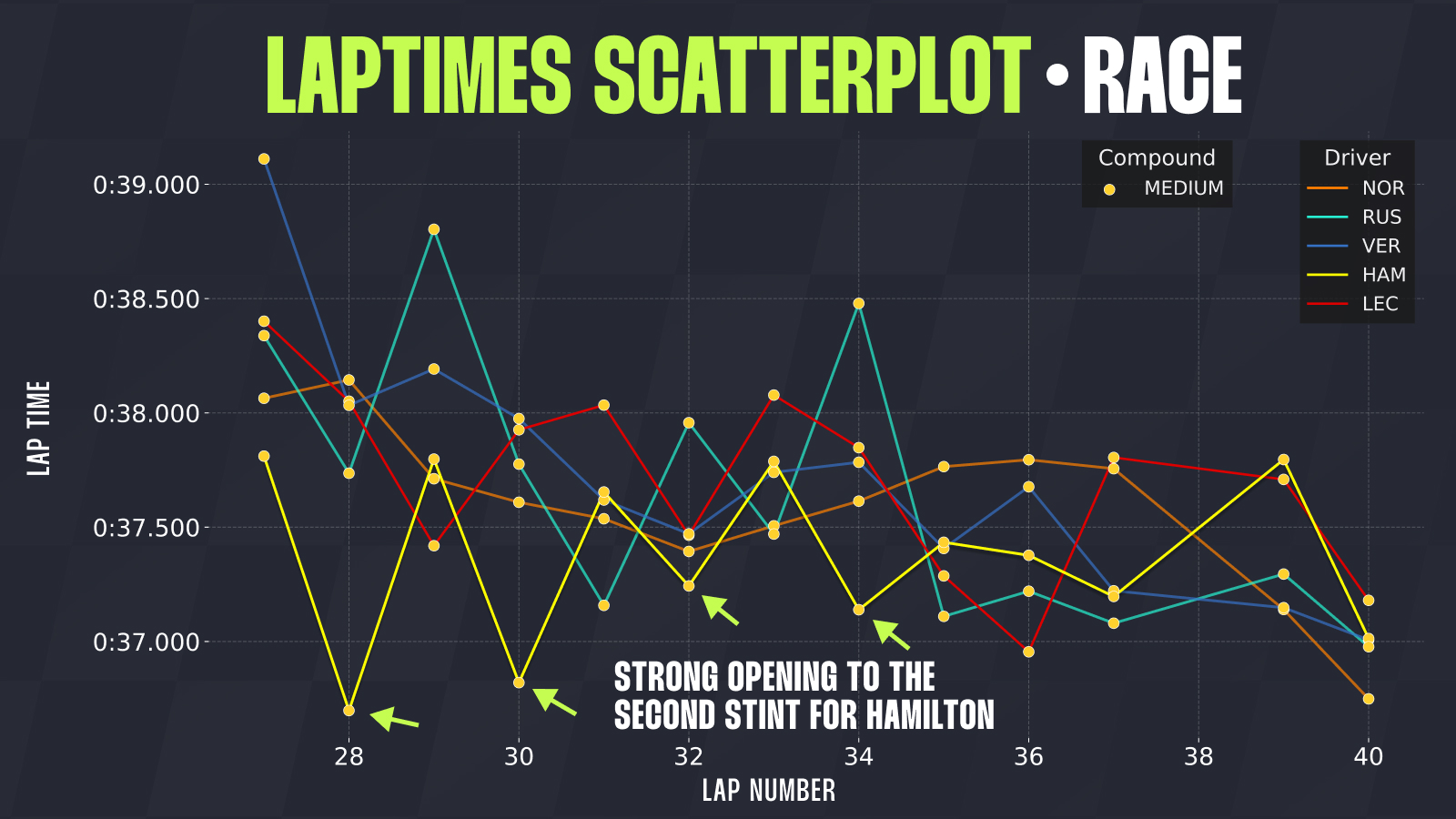
Laptimes scatterplot – Race
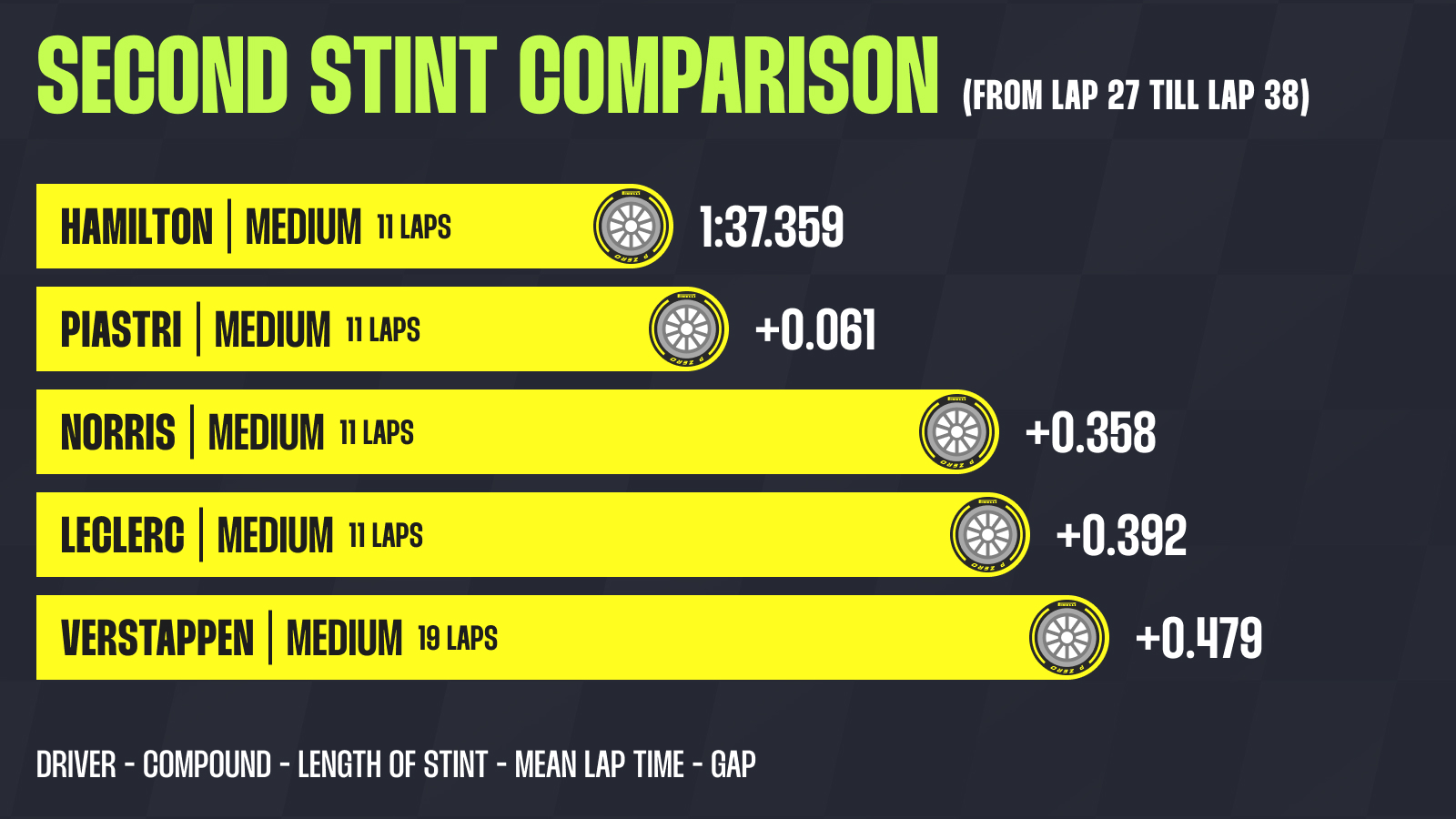
Second stint comparison (from lap 27 to lap 38)
More on Ferrari at the Las Vegas Grand Prix
Lewis Hamilton fumes at Las Vegas penalty as Charles Leclerc comparison emerges
Ferrari summons Charles Leclerc after ‘unacceptable’ Lewis Hamilton Las Vegas clash
Had contact been avoided and Ferrari managed to beat McLaren—a thoroughly realistic prospect—we might now be talking about a remarkable Scuderia comeback and a double podium.
That outcome would have been aided further by Russell hitting the wall late on and Antonelli losing battery deployment over the final two laps.
Instead, we are once again analysing how Ferrari shot itself in the foot and left Las Vegas with just seven points—its second-lowest points haul of the season after scoring only six in Brazil.
Whether the team will introduce stricter internal rules of engagement remains to be seen, but one thing is certain: the lack of clear team orders has only hurt it this season.
Read Next: Max Verstappen survives Mercedes onslaught in spectacular Las Vegas Grand Prix thriller