New HDB neighbourhood planned for Pasir Ris
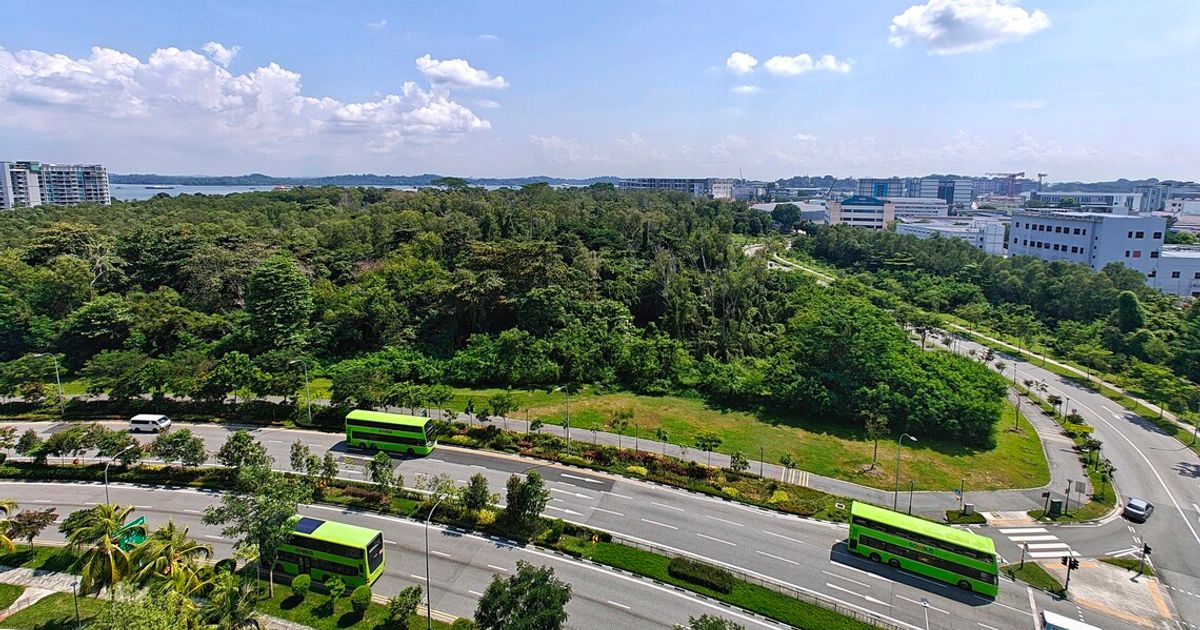
SINGAPORE – A new neighbourhood with a mix of public and private homes will be built on a forested site in Pasir Ris Drive 4, given strong housing demand in the town, the Housing Board said on Nov 23.
It has proposed preserving about 13ha of existing nature, including coastal areas and vegetation, following an environmental impact assessment (EIA) covering 36ha of land.
In a Facebook post, HDB said that in planning for new homes in the area, it has assessed alternative brownfield sites, or previously developed land. These include Siglap Secondary School and industrial sites like Lorong Halus.
“However, these sites are already being planned for future housing supply, needed for other national uses or cannot be made available within the timeframe required,” it said.
It said that no brownfield sites available in the next few years can match the housing capacity of the Pasir Ris Drive 4 plot, which has been earmarked for residential use since 1980.
An HDB spokesman said the site will meet housing demand within the next decade, and development is expected to be carried out progressively in the next few years.
In addition to the EIA, HDB said it had engaged with nature groups to better understand the site’s ecological value and how the impact on the environment can be minimised.
Of the 13ha of existing nature slated to be kept under its conceptual land use plan, about 8ha by the coast consists of intertidal, seagrass and mangrove habitats. These will be kept to safeguard the site’s most important coastal habitats and biodiversity, it said.
Adjacent to that, about 5ha of vegetation will be retained to serve as a buffer between the housing development and the mangroves and an existing stream. It will also serve as a stepping-stone habitat for wildlife and maintain ecological connectivity along the coast.
About 1ha in the south-eastern corner of this area may be needed for potential coastal protection measures, but will not be developed in the medium term.
HDB has plans for a 15m-wide park along Sungei Loyang, which will be “lushly planted” to support biodiversity.
It will also provide green spaces along the other edges of the site as a walking path for residents.
HDB said it will implement an environmental monitoring and management plan to guide construction activities and manage potential impact on the surrounding habitats.
“Together, these measures will help us plan sensitively around the site’s important ecological features while meeting Singaporeans’ housing needs.”
The last Build-To-Order (BTO) project launched in Pasir Ris was in October 2024, with the flats in Costa Riviera I and II seeing strong demand from first-timer families. Application rates for four-room flats was 3.6, while that for five-room and three-generation flats was 6.7.
The Straits Times reported in 2025 that the Government was studying plans for a new neighbourhood in Pasir Ris town, with an environmental study under way for the Pasir Ris Drive 4 plot.
More homes are also set to be built next to Pasir Ris MRT station, on the site of the former Pasir Ris Bus Interchange, while a new community hub for the town centre is in the works.
Endangered species
The EIA report conducted by Tembusu Asia Consulting recorded 159 terrestrial plant species, 26 mangrove species and 254 animal species across the 36ha study area.
These include the critically endangered greater mousedeer and Sunda pangolin – both of which swam over from Pulau Ubin – as well as two mature trees of the native mangrove hybrid berus mata buaya, which is of conservation significance.
Retaining the 13ha area will preserve 22.2% of suitable habitat for land animals, and create a 150m buffer from the mangroves and a 50m buffer around the forest stream, it said.
The report also noted evidence of an established breeding population of the locally endangered white-rumped shama bird within the site’s forest.
Unlike most white-rumped shamas on mainland Singapore, which stem from the bird trade and are non-native, the birds found at the site could have been dispersed from Pulau Ubin, meaning they could be genetically native and of high conservation value.
The retained areas will continue to provide feeding and breeding grounds for the bird.
Lester Tan, a member of the Nature Society Singapore’s conservation committee, said the 5ha retained forest patch was a good effort to mitigate the impact on wildlife. But he questioned whether it has the holding capacity to sustain the various species.
Pointing out that the retained area is meant to function as a stepping-stone habitat, he said this means the wildlife has to find another place to settle eventually.
“Birds can fly to Tampines Eco Green, but non-flying animals will be pushed towards Pasir Ris Park, which may not be suitable as it is quite urbanised,” he said.
Marcus Chua, a mammal curator at the National University of Singapore’s Lee Kong Chian Natural History Museum, said one of the site’s key ecological values lies in its location along Singapore’s north-eastern coast and its proximity to Pulau Ubin, allowing it to receive threatened wildlife from the eastern Johor Strait.
The retained forest is likely sufficient for this role, he said, noting that even the original forested area would have been too small to serve as a breeding habitat for the greater mousedeer and Sunda pangolin.
The report recommended informing future residents about nearby wildlife before they purchase their homes, as well as using wildlife-proof bins, to minimise human-wildlife conflict.
While the report did not specify any animals, Tan said residents could encounter wildlife such as snakes, hornbills, otters and various insect species around the new neighbourhood.
Distance to amenities
Lee Sze Teck, senior director of data analytics at real estate agency Huttons Asia, estimated that the site could house up to 3,000 HDB flats, or up to 4,000 private homes.
Eugene Lim, key executive officer of ERA Singapore, said that with a gross plot ratio of 2.1, the residential developments there could go up to 24 storeys in height.
These homes could meet pent-up demand for the estate, as most flats in the area – apart from two recent BTO projects – were completed in the 1990s, he said.
Lee noted that the neighbourhood is about 900m away from both Pasir Ris MRT station and the upcoming Loyang station on the Cross Island Line.
It is slightly farther from the main amenities in the town centre, which include shopping centres such as Pasir Ris Mall and White Sands, as well as a hawker centre and sports centre, he added.