Singapore year-end weather unlikely to be hit by El Nino
SINGAPORE – Singapore may have felt El Nino’s wrath during the dry, hazy months of September and October, but the good news is that the Republic’s year-end “winter” weather is unlikely to be affected by the climate phenomenon.
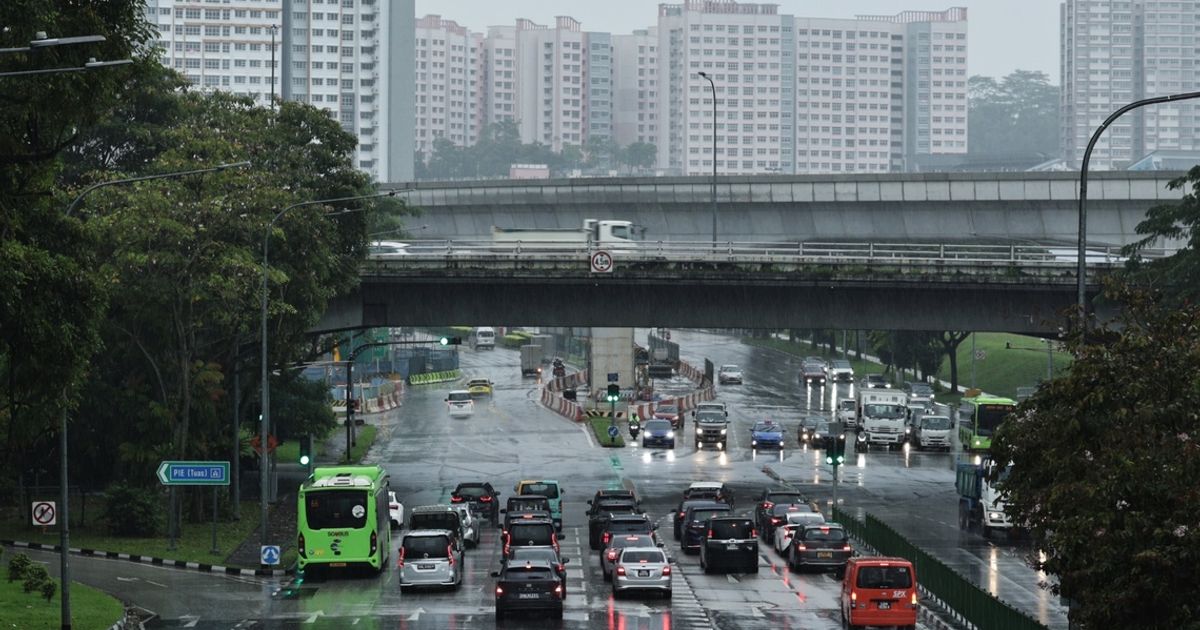
December will likely still be marked by prolonged showers, windier conditions and cooler temperatures, experts told The Straits Times.
The Meteorological Service Singapore (MSS) told ST: “The area around Singapore, including Sumatra and western Kalimantan, often experiences near- or above-average rainfall during December-February under El Nino conditions.” El Nino conditions result in hotter, drier weather in the equatorial parts of South-east Asia.
This year’s phenomenon, which had developed in mid-2026, has been described as a “Godzilla” El Nino as it has been an exceptionally strong one.
It is likely to be one of the strongest, if not the strongest, El Nino events in recent decades, MSS has said. The phenomenon worsened Indonesian forest and peatland fires that cloaked the island state in haze between September and October, when air quality reached very unhealthy levels. It was the region’s worst haze crisis in over a decade.
Matthias Roth, professor of urban climatology at the National University of Singapore, noted that El Nino’s influence on Singapore’s rainfall is less pronounced during the north-east monsoon.
In this period, winds blow from the colder Northern Hemisphere towards the Equator. Singapore experiences heavy rainfall and cooler temperatures during the wet phase of the monsoon in December and January.
“December and January are normally among our wettest months, and we could still experience periods of prolonged heavy rainfall associated with monsoon surges, even if overall rainfall turns out to be below average,” he added.
A monsoon surge refers to bursts of cold air from the wintry north-east, such as Central Asia, flowing over the warm waters of the South China Sea. The air picks up moisture, bringing widespread rainfall, strong winds and cooler weather to Singapore over a few days.
However, the impact of El Nino could still come back to bite around February and March.
Singapore usually experiences drier weather during those months, as the monsoon rain belt moves south of the country.
Koh Tieh Yong, NUS adjunct associate professor in atmospheric science, said: “The dry phase could be more pronounced than usual because the El Nino event will still be strong and that would bring less rainfall to Singapore.”
The last super El Nino event, which developed in 2015 and continued into 2016, worsened the dry conditions in Singapore and Malaysia during the dry phase of the north-east monsoon season.
This caused the water levels of Johor’s Linggiu Reservoir – where Singapore imports its water from – to decline. Around March 2016, the water levels were at 42%, before falling to 20% in October that year. A prolonged dry spell then could have possibly affected the water supply to the Republic.
When asked if there is a risk of a similar situation in 2027, national water agency PUB said that during the dry months, it will increase the production of NEWater from used water and desalinated water from the sea to supplement the water supply from catchments.
Catchments refer mainly to reservoirs and the canals and drains that send rainwater to them.
“This diversified water supply has strengthened Singapore’s water resilience during dry periods, including phenomena like El Nino,” added the agency.
Other than drier weather, Singapore could also experience bouts of haze early next year, if there are fires blazing in areas to the north of the country.
This was the case in March 2016 when pollution likely came from Peninsular Malaysia, Borneo and even vegetation fires in Singapore.
In early 2026, Singapore faced hazy conditions for several weeks due to wildfires in Johor, including a peatland fire covering 200ha across Kota Tinggi and Pengerang. A persistent burning smell was in the air even though air quality did not deteriorate to unhealthy levels.
Koh noted that the root cause of haze is people illegally burning forest or cultivated land, or even rubbish heaps.
As long as such activities happen, smoke haze could affect places including southern Thailand, the Malay Peninsula including Singapore, and Sumatra.
“But the recent intense haze episode of September to October 2026 would have put regional law enforcement authorities on alert against indiscriminate burning, mitigating the increased risk due to drier weather,” Koh added.