Rare celestial cluster of four to be visible at pre-dawn on Monday
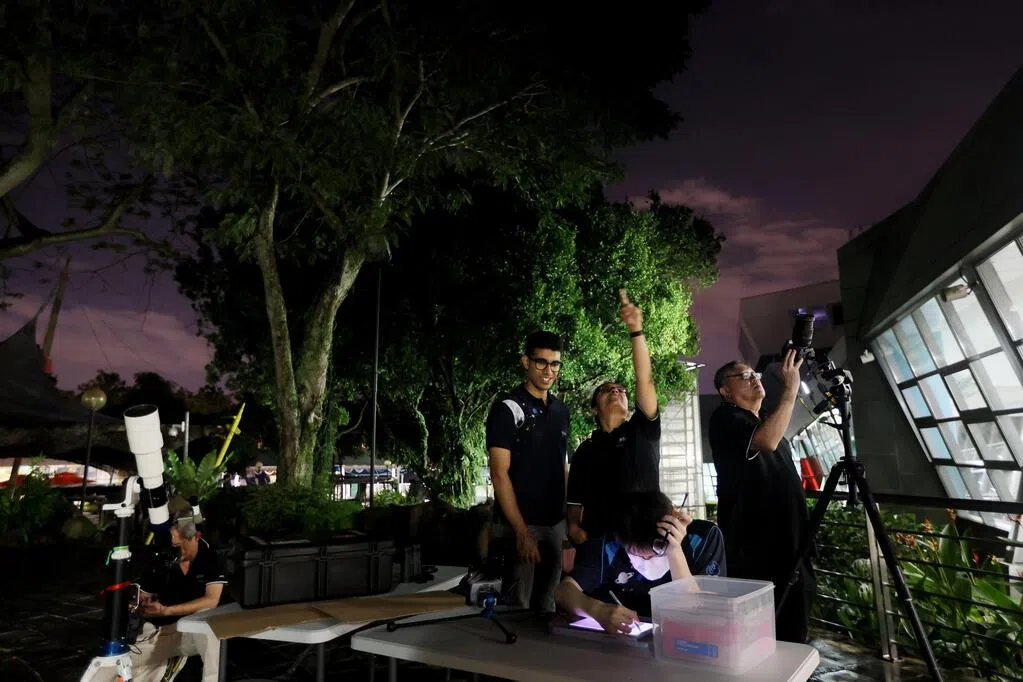
Astronomy enthusiasts may be in for a treat before sunrise on Monday (30 November), when Jupiter, Mars and Regulus, the brightest star in the constellation Leo, are expected to gather around the moon.
All four celestial bodies are relatively easy to see, so no specialist telescope is needed. In clear weather, the cluster will be clearly visible to the naked eye.
Between about 4am and 6am on Monday, Jupiter, Mars, Regulus and the waning moon will cluster within a circle just 5.2 degrees across — roughly the width of three fingers held together at arm’s length.
In astronomical terms, this is a rare, compact grouping of planets and a star in conjunction with the moon.
Planets, stars and the moon usually follow different orbits or apparent paths across the sky, and conjunctions involving two of them are not unusual. But according to astronomy website Star Walk’s predictions, it is extremely rare for four bright celestial bodies to gather within such a small area at the same time. Only seven such gatherings occur between 1900 and 2099.
To spot them, simply look up at the night sky and first locate the moon, the brightest object. The other three will be clustered close beside it.
The brightest object next to the moon will be Jupiter, shining with a steady, milky-white light. Slightly dimmer will be Mars, with its distinctive orange-red hue. The faintest of the four will be the blue-white Regulus, the “heart” of Leo.
Those who miss the gathering early on Monday, or encounter poor weather, will still be able to see the four celestial bodies clustered together at the same time on Tuesday (1 December). The moon will have shifted slightly eastwards, closer to Regulus.