Singapore, Australia ink 2 pacts as PM Wong hails ‘trusted partnership’
WHAT THE TWO DEALS ENTAIL
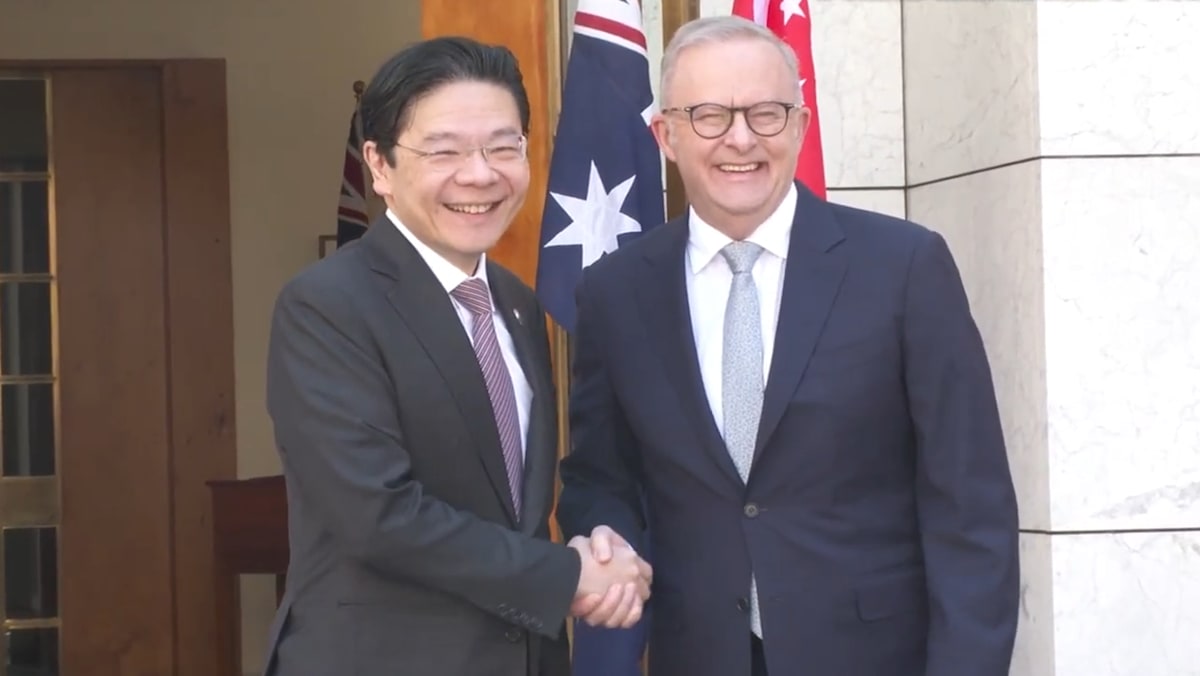
The MOU on essential supplies was signed on Tuesday by Singapore Minister for Sustainability and the Environment and Minister-in-charge of Trade Relations Grace Fu and Australia Minister for Foreign Affairs Penny Wong, and witnessed by Mr Wong and Mr Albanese.
In July this year, Singapore and Australia signed the Protocol on Economic Resilience and Essential Supplies, under which Singapore and Australia will commit not to adopt or maintain export restrictions on agreed essential items.
The protocol also provides for advance notification, consultation, and the review and withdrawal of measures, and will enter into force once both countries complete their domestic procedures, said the Ministry of Energy, Trade and Industry (METI) in a press release.
Tuesday’s MOU supplements the protocol by extending Singapore’s and Australia’s commitments to support trade flows in a broader range of essential supplies beyond petroleum oils and liquefied natural gas.
These include agricultural chemicals and inputs such as crop protection products and fertilisers, construction materials, food, fuel and fuel additives, pharmaceuticals and medical products, renewable energy technologies, semiconductors, telecommunications equipment, traffic signalling equipment and water treatment chemicals.
Separately, Singapore and Australia signed the Agreement on Transboundary Movement of Carbon Dioxide Streams for the Purposes of Offshore Geological Sequestration to enable carbon capture and storage.
The agreement was signed by Minister for Sustainability and the Environment and Minister-in-charge of Trade Relations Grace Fu and Australia’s Minister for Trade and Tourism Don Farrell, and witnessed by both prime ministers.
The agreement formalises the transfer of carbon dioxide accounting responsibility for the cross-border movement of carbon dioxide from Singapore to Australia, and lays the groundwork for how carbon dioxide would be measured, reported and accounted for by each country, in line with the Paris Agreement and United Nations Framework Convention on Climate Change (UNFCCC) reporting guidelines.
“The agreement reflects Singapore and Australia’s shared commitment to reducing carbon emissions and achieving net-zero by leveraging Singapore and Australia’s complementary strengths to advance our shared decarbonisation objectives,” said the Ministry of Energy, Trade and Industry (METI) in a press release.
The ministry added that the agreement will allow Singapore to tap on carbon capture and storage as a potential decarbonisation pathway, alongside others in its broader effort to transition towards a low-carbon economy.
METI said that carbon capture and storage “is especially relevant for hard-to-abate industries where emissions cannot easily be abated through existing technologies”.