Singapore tech stocks surge after Nvidia CEO return
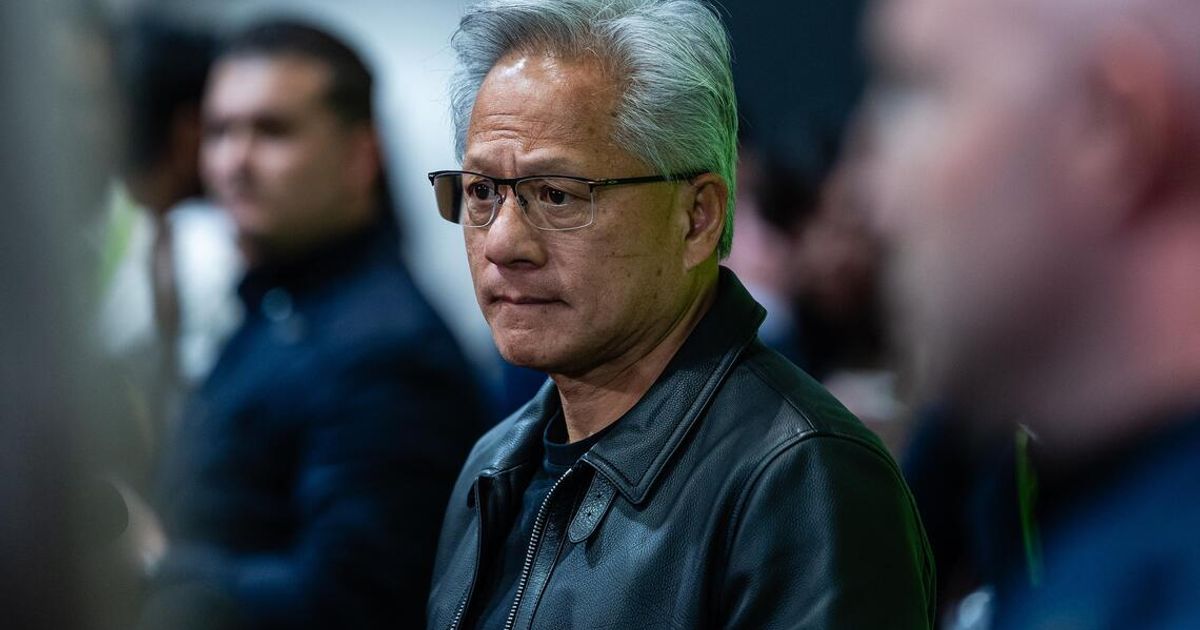
SINGAPORE – Tech stocks in Singapore rallied after the news that Jensen Huang was reinstated as Nvidia chief executive, riding the waves of optimism after a sell-off the week before.
Advanced semiconductor packaging manufacturer Mi Material surged 20% before noon on Nov 24. It closed up 23% at $1.28.
Meanwhile, semiconductor and electronics test solutions firm AEM was up 6.3% at 11.25am on Nov 24 but closed 3.5% higher at $6.21.
ST Engineering ended the day up 1.6% and semiconductor manufacturer UMS was up nearly 4%. CSE Global, which provides industrial automation and information technology, saw stocks rise by 2.6%, but this increase moderated to 0.6% at the end of the trading day.
Integrated technology solutions provider Frencken rallied by 5.8% in the day, but also moderated to close up 3.2%. Electronics and graphics card manufacturer PC Partner was up 9.9% in the day, and closed even higher, with a rise of 10.6%.
This follows the rally among Asia stocks, as Wall Street surged after shares of Nvidia ended 31.5% higher after the trading session on Nov 23, following Huang’s return.
Huang resigned on Nov 12 after it was revealed he had extramarital affairs, including one with an alleged Chinese spy Alice Huang. She was an executive at Singapore-based Megaspeed International, an important Nvidia customer.
Huang’s resignation, together with concerns over heavy AI investments and borrowing, caused a sharp sell-off over the past week, as the S&P 500 and Dow Jones indexes corrected from their previous rallies.
But his return buoyed the market, with the Nasdaq rising some 6% with the news of his reinstatement.
Asia markets responded in kind. Japan’s Nikkei jumped around 4%, while South Korea’s KOSPI surged over 6%. The Taiwan Stock Exchange Capitalization Weighted Index was trading up by 9% on Nov 24.
Saxo chief investment strategist Charu Chanana said Huang’s return removes a major source of uncertainty for the AI trade. “While it may not justify immediate earnings upgrades, it reduces the risk of earnings downgrades,” she said. “The relief is understandable. Huang is not just Nvidia’s CEO; he is arguably the biggest salesman for the entire AI ecosystem. His relationships with customers, suppliers and capital providers are difficult to replicate.”
She noted that the strongest rebounds – from Nvidia to Dell, SK Hynix and Micron – have come from financing-dependent AI infrastructure companies, highlighting how much of the recent sell-off was driven by concerns around funding the AI buildout. These companies all saw double digit jumps in stock price after the news that Huang had returned.
Chanana added: “This was primarily a recovery in confidence around AI spending and financing, rather than AI adoption and monetisation.”
She said that for investors, the distinction is important. “The companies rallying the most offer greater upside if AI spending fears prove overdone, but they also remain among the most vulnerable if financing conditions deteriorate or infrastructure spending slows.”
She added that investors looking into AI stocks should look into earnings resilience, financial strength of the company in funding its external plans without heavy external financing, and valuation. “The objective is not to recover last week’s losses as quickly as possible. It is to build a portfolio that can participate in an AI recovery without being entirely dependent on one.”
Clarence Li, lead portfolio analyst for equity strategies at asset manager T. Rowe Price, said analysts see the overnight rebound as a relief rally following a sharp sell-off driven primarily by positioning and sentiment. “Looking ahead, we expect volatility to persist as investors continue to adjust positions. Nevertheless, resilient AI fundamentals support the view that the recent correction represents a reset within the broader investment cycle rather than the beginning of a prolonged downturn,” Li said.
Meanwhile, a report by SGX showed that while global semiconductors sold off during the previous week, Singapore investors were net buyers. Retail investors bought a net $257 million, while institutions bought $38 million.
Retail investors’ largest net purchases were DBS, UOB, ST Engineering, Seatrium and AEM, all net sold by institutions, while institutions’ largest buys were CapitaLand Ascendas REIT, Singtel and OCBC.
SGX noted that retail investors bought the stocks that dropped 10% or more, the opposite of institutions. Four out of the five largest purchases by institutions had declined by less than 5% or advanced. “When viewed from the handful of structural economic themes, institutions net sold the AI-driven productivity names and net bought holdings tied to infrastructure, energy and connectivity, such as Singapore Telecommunications and Sembcorp Industries,” SGX said.
Meanwhile, retail investors bought financial stocks and technology stocks – including the names closest to the AI sell-off such as AEM, CSE Global and Frencken.

